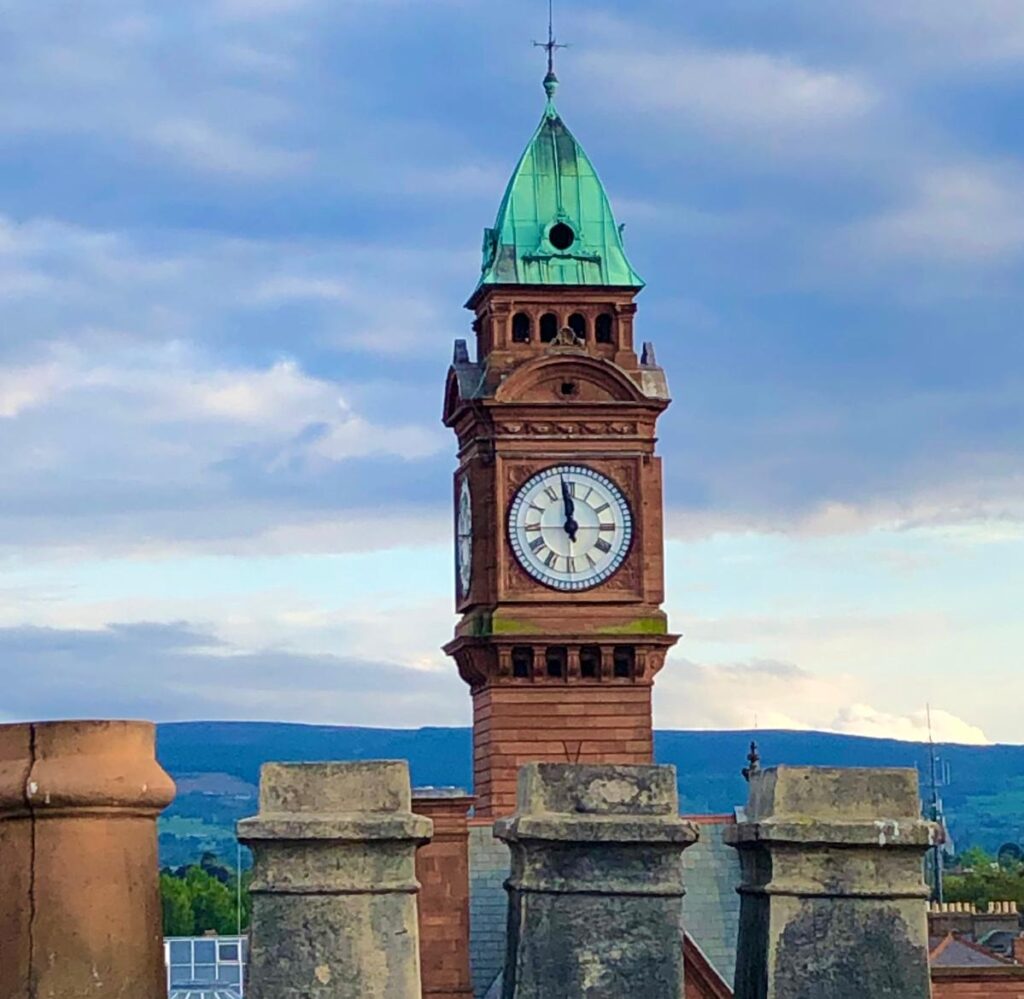
The Rathmines Initiative was set up by a number of local residents’ associations in 1998 at the invitation of Dublin Corporation with the objective of producing a Local Development Plan, which would act as a blueprint for the future development of Rathmines. Dublin Corporation recognised the input of communities which were taking the initiative to produce their own plans as a means of accelerating the production of statutory local plans to be incorporated into the City Development Plan.
Their activity since then is outlined on this page.
Year: 2000
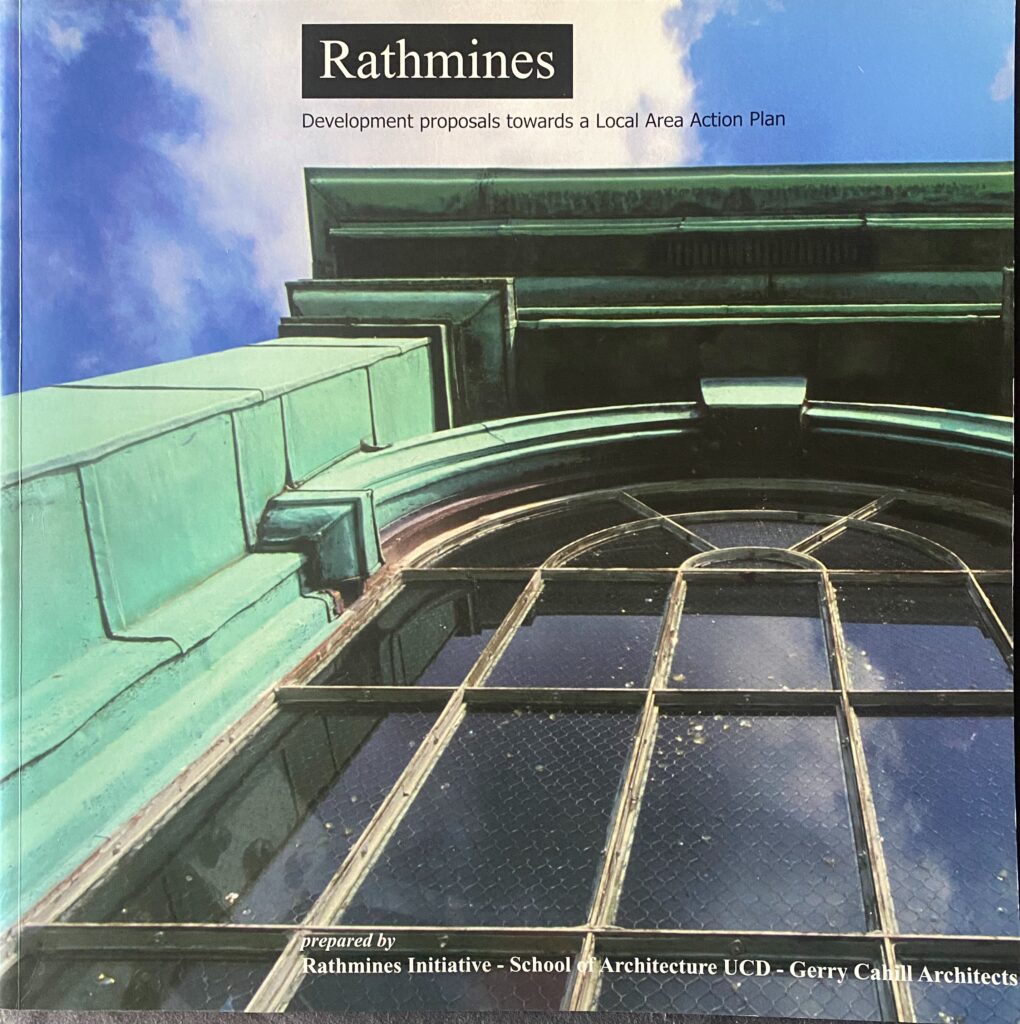
Rathmines: Development Proposals towards a Local Area Action Plan
Recognising the value of local input, the City Council made a grant to the Rathmines Initiative to commissioned this Study from UCD School of Architecture. The Study was carried out between May and September 1999 under the direction of university lecturer and local architect Gerry Cahill.
Year: 2003
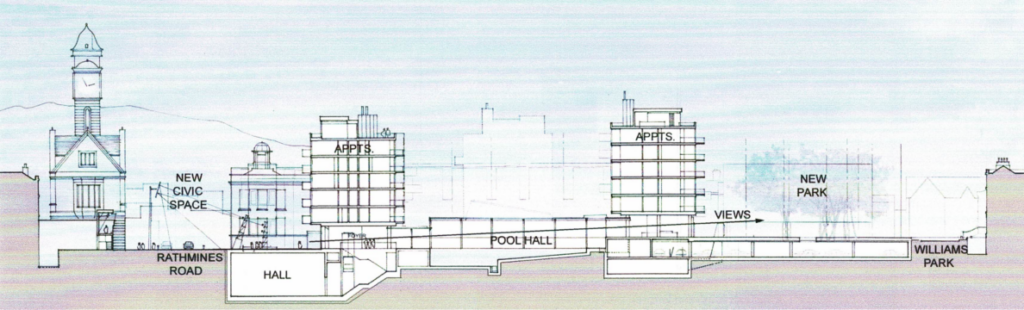
Architectural Competition for the new Swimming Pool Complex - Swan Leisure
The Study published in year 2000 inspired the design competition that led to the construction of the Swan Leisure Centre. The competition was won by Dublin firm Donnelly Turpin Architects and provides cherished indoor and outdoor leisure facilities, a creche, fine public spaces front and back, and residential accommodation on upper floors. The project, which was opened in September 2010, is an outstanding example, both in its facilities and its design, of optimising the use of public land and providing public services in consultation with local communities.
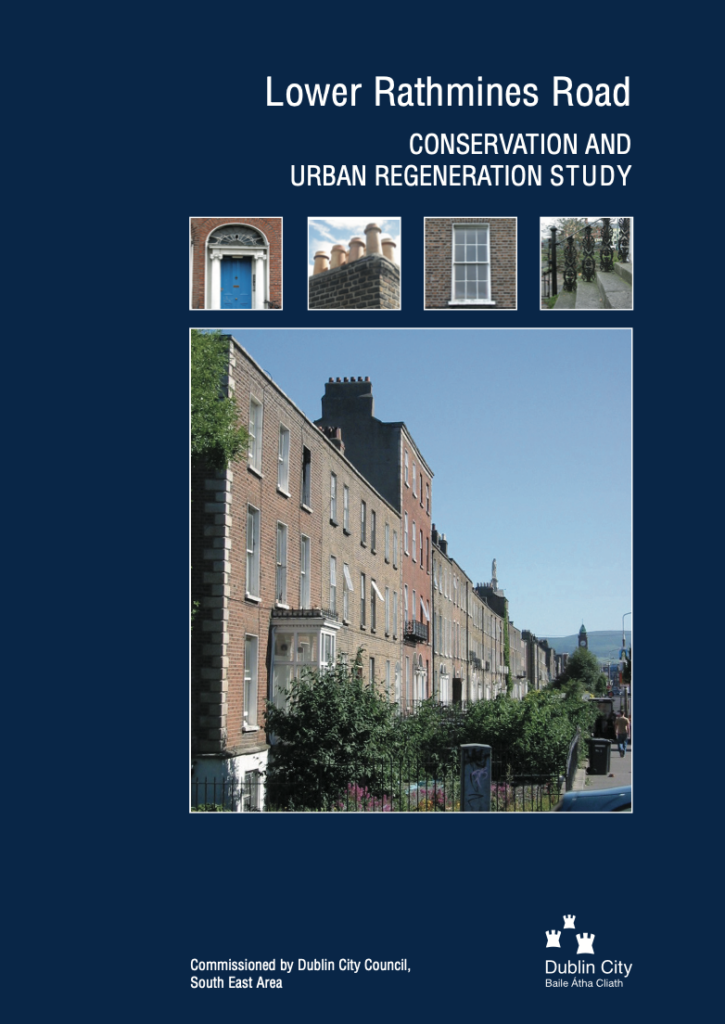
Lower Rathmines Road: Conservation and Urban Regeneration Study
In 2003, Dublin City Council (South East Area) commissioned a conservation study of Lower Rathmines Road in recognition of the need for physical, social and economic rejuvenation in the area, as identified by the year 2000 study. The Council invited the Rathmines Initiative to join the steering group guiding the project. The study was written and compiled by Blackwood Associates Architects and was intended as further input into the council’s Local Action Plan.
The document remains a valuable reference guide and you can read it here:
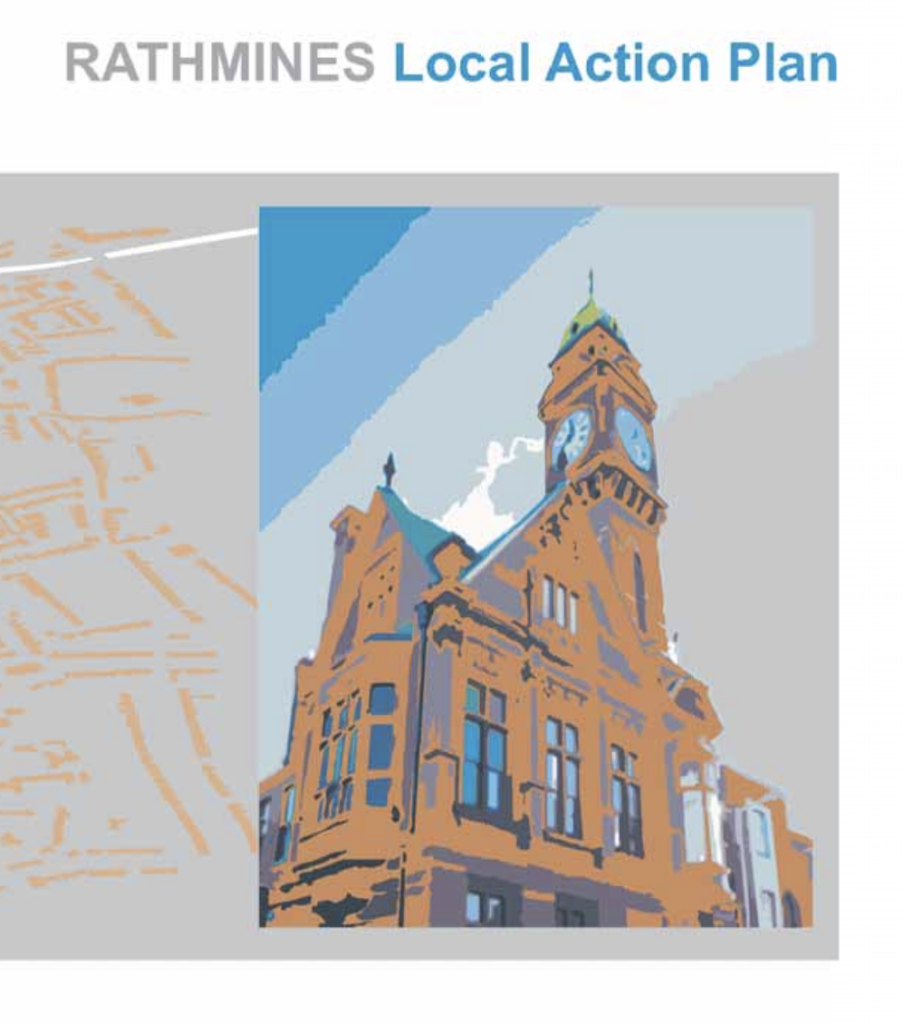
The Rathmines Local Action Plan was adopted by Dublin City Council in November 2009. A Local Action Plan comprises a written statement and plans indicating the objectives that will guide and encourage appropriate development in the area. It remained in force until 2015 and was intended to form the basis on which planning decisions would be made during that period. Although it is no longer in force, it provides valuable analysis still relevant to the development of Rathmines. The document acknowledged that “the proactive work of the Rathmines Initiative over recent years has been a significant benefit to the preparation of the Plan”.
You can see the Rathmines Local Action Plan by clicking this link:
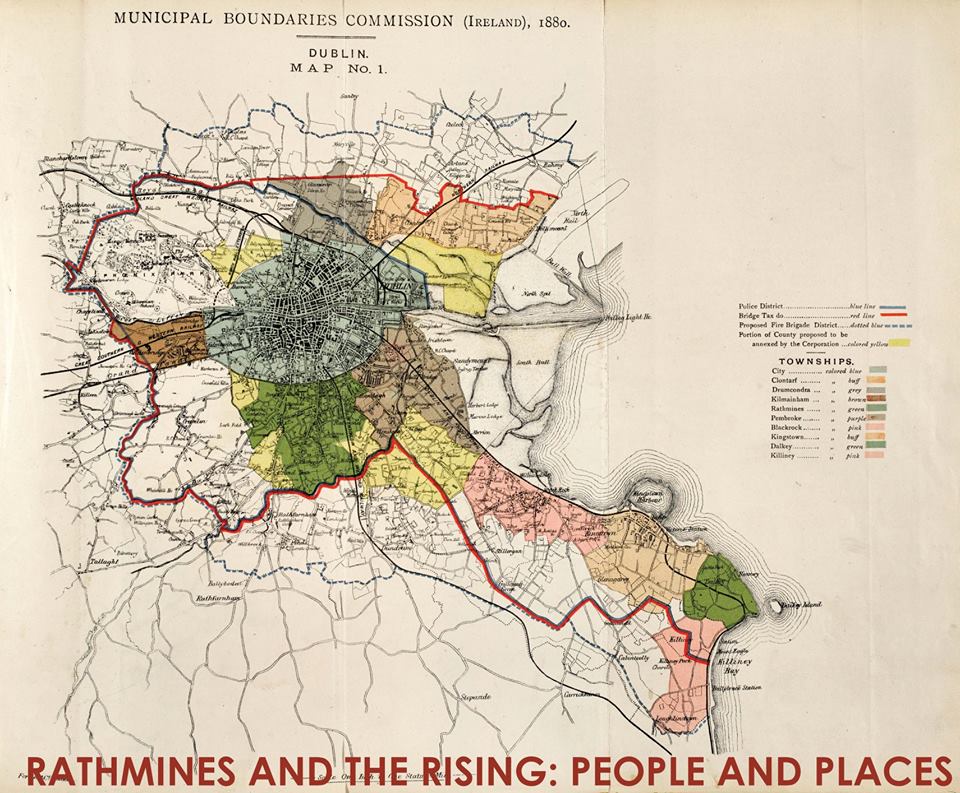
Exhibition: Rathmines and the Rising: People and Places
To commemorate the centenary of 1916, the Rathmines Initiative published the booklet ‘Rathmines and The Rising: People and Places’ and mounted a two month long exhibition in Rathmines Library. Copies of this booklet are available to purchase for €10 by contacting us via our Contacts link.
The contents of the exhibition can be seen by clicking the tab under Our Story or the link below.
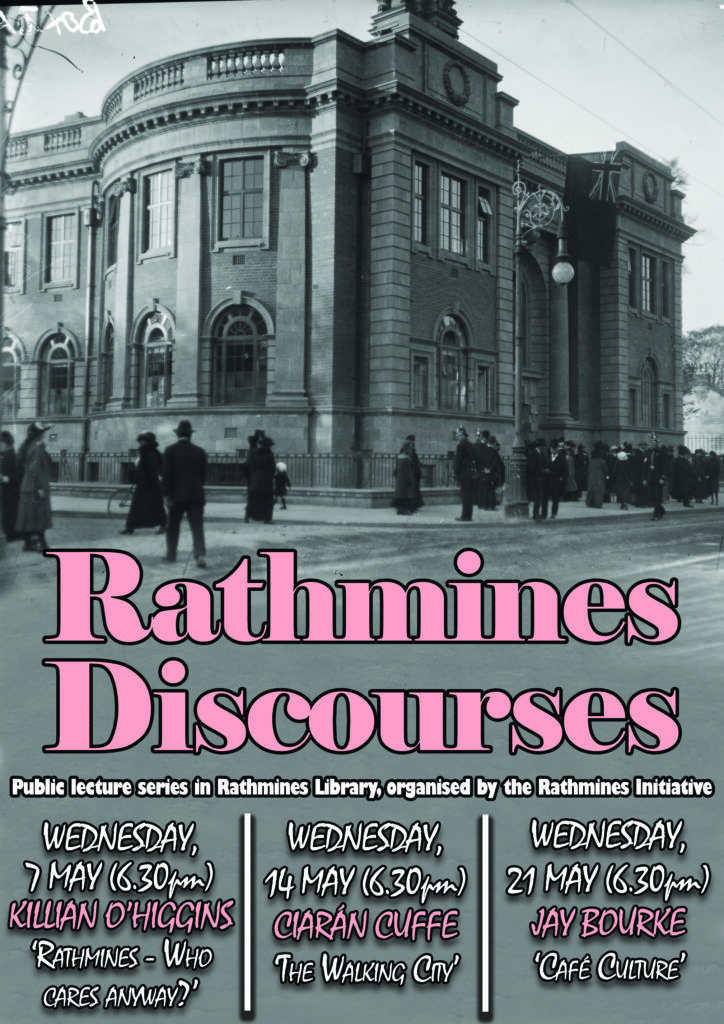
For many years, the Rathmines Initiative organised series of Discourses – public conversations on matters of national and local importance.
We plan to resume these Discourses when resources allow and a public demand is present.
Ongoing
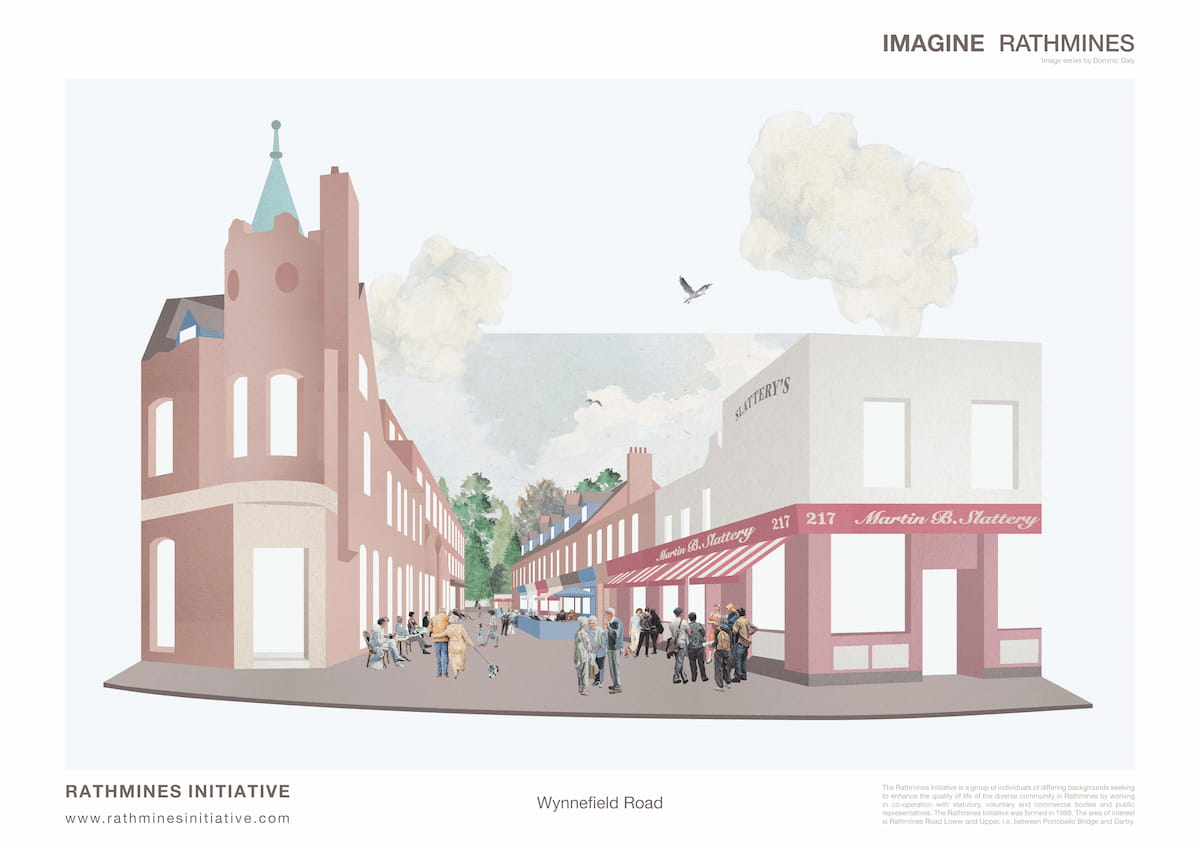
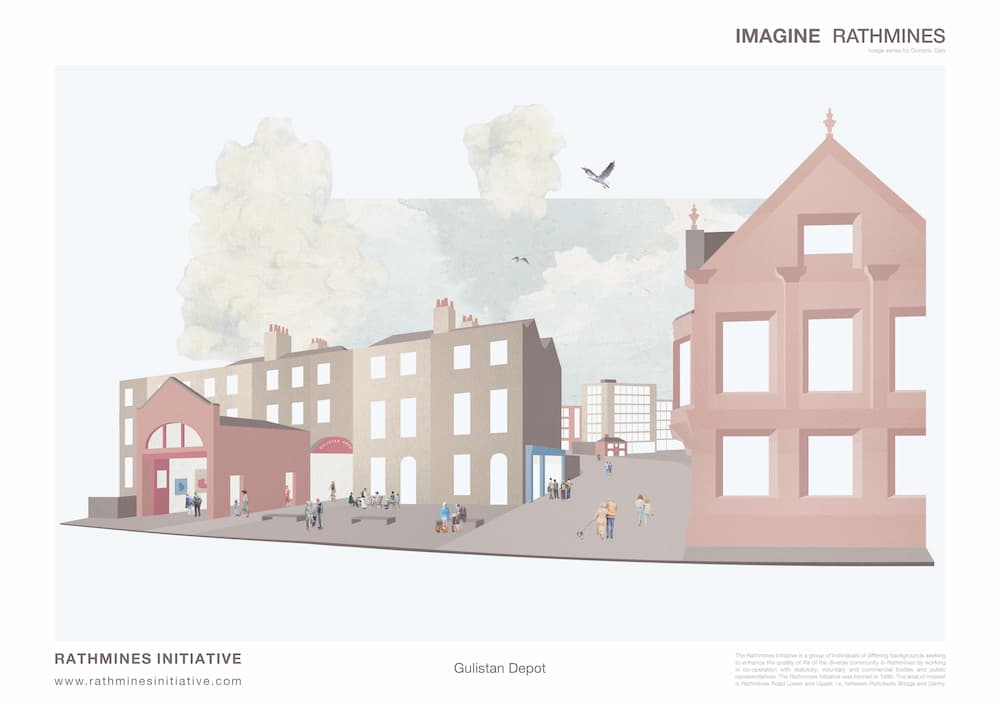
Imagine Rathmines
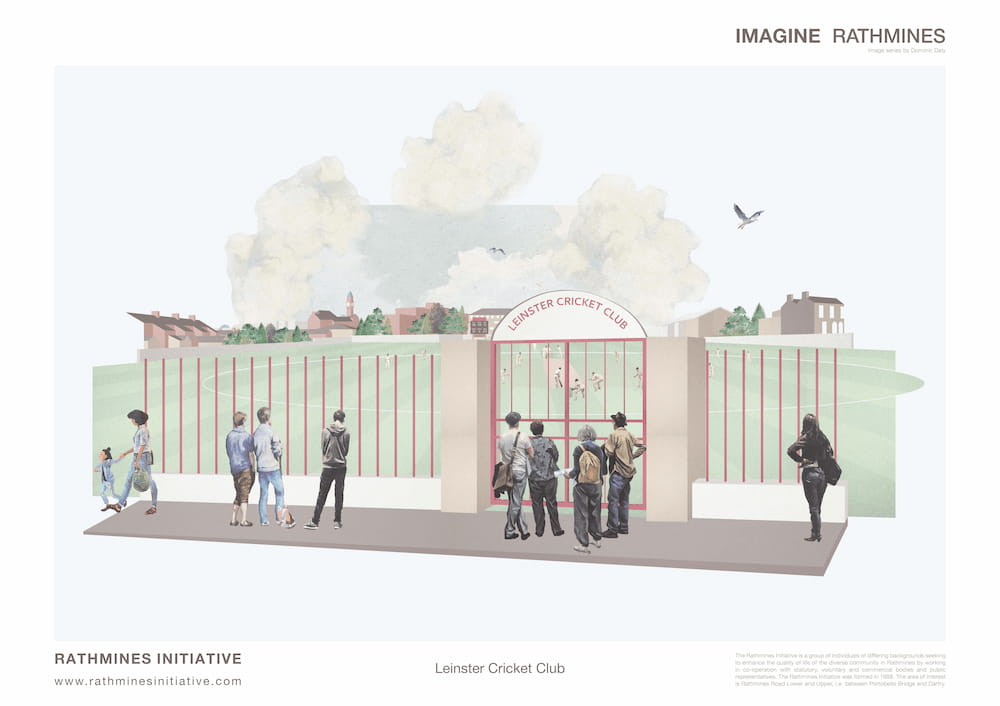
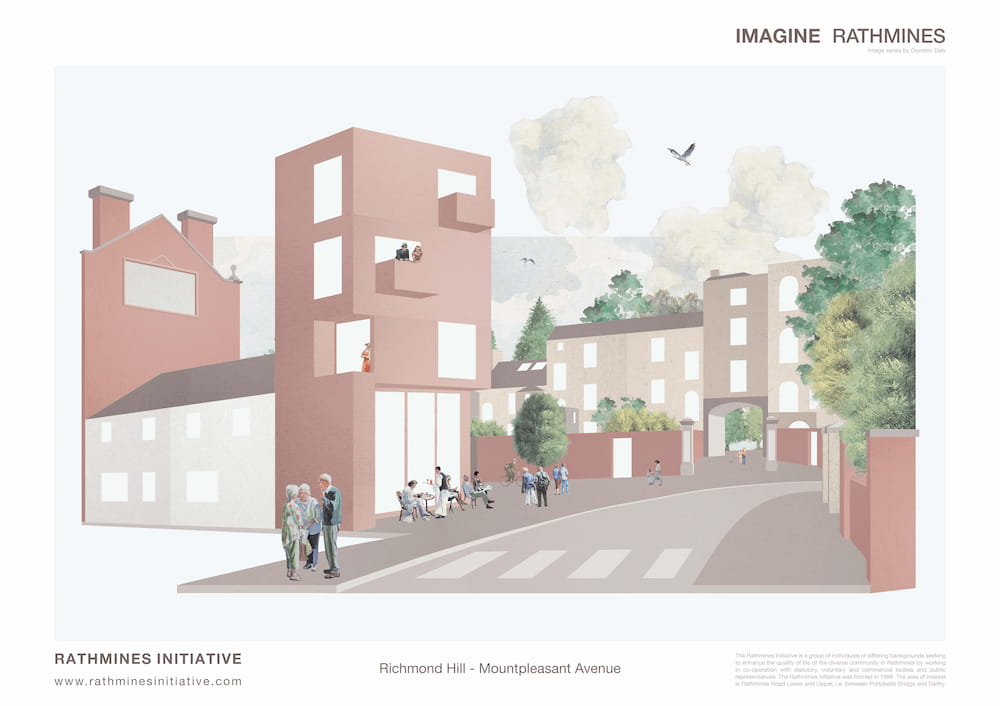
The Rathmines Initiative has an ongoing project to imagine how many well known corners of Rathmines could be improved with imaginative development. Our studies so far have covered the ideas of pedestrianising Wynnefield Rd; making the cricket pitch of Leinster Cricket Club visible to passers-by on Mountpleasant Avenue; a landmark building at the junction of Richmond Hill and Mountpleasant Ave junction; and widening the lane access to Gulistan which runs along the side of the Town Hall, in the context of the future development of Gulistan and a possible refurbishment of the auditorium of the Town Hall.
Ongoing Annually
Rathmines Open Gardens Day
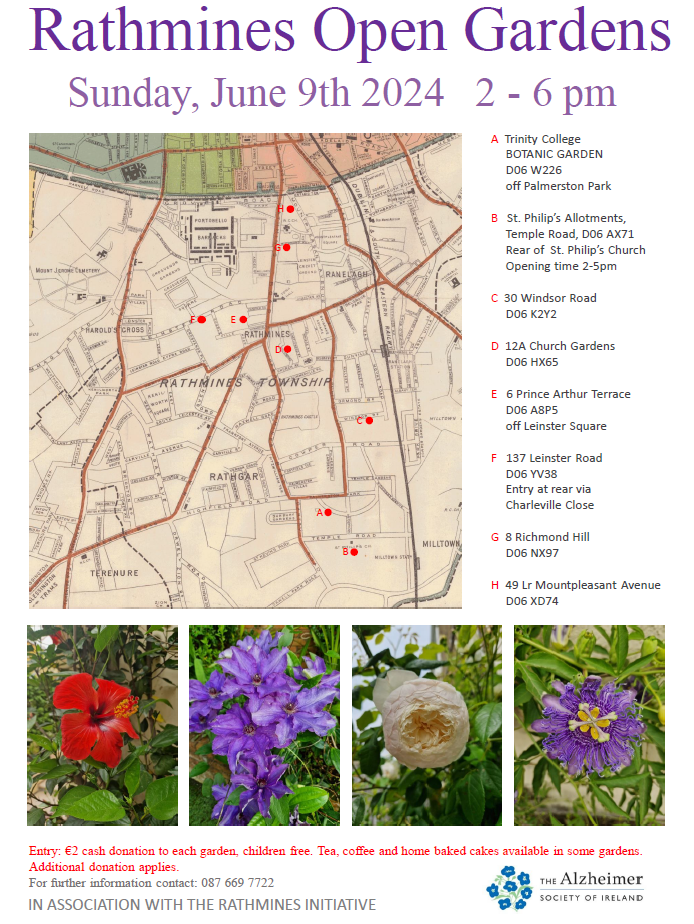
The Rathmines Initiative’s annual Open Gardens Day has established itself as a very popular community event and has raised significant funds for the Rathmines Women’s Refuge, the Richmond Hill Crèche, the Donal Walsh Foundation, the Gateway Mental Health Association, the Alice Leahy Trust, the Irish Heart Foundation, UNICEF Children’s Fund for Ukraine, the Alzheimer’s Society, among others. It is held on the second Sunday of June each year.
Rathmines is bisected by a major traffic route connecting the south west of the city with the city centre, which carries a great deal of through-traffic and has to be shared by all transportation modes, from pedestrians with buggies to five-axle trucks. There are currently very few alternative safer side-routes for pedestrian and cycle traffic to access outlying residential streets. The Rathmines Initiative is undertaking a study to identify the potential for such routes in future developments which it will publish here when complete. Examples of the possibilities are:
Rathmines Road Upper to Purser Gardens / Belgrave Rd, and to Cowper Downs, via the Church of Ireland lands;
Rathmines Road Lower to Mountpleasant Avenue Upper via Gulistan Terrace;
Rathmines Road Lower to Williams Park via Rathmines Technical Institute site (see above);
Rathmines Road Lower to Mount Drummond Avenue via Cathal Brugha Barracks.
Ongoing
Public Meetings
From time to time the Rathmines Initiative organises public information meetings and exhibitions on proposals likely to have major impacts on the local community. In recent years, meetings have been held on the Gulistan Depot Development in 2020 and on the BusConnects proposal in 2023.
In late 2024 we embarked on a project to capture the essential statistics of Rathmines in terms of residential accommodation, public buildings, and public and private services so as to create a knowledge base to identify opportunities and gaps relevant to the future development of the area. It is in its early stages and we will report progress in the News section.